


Health Tested Breeding Program Example for Ragdolls
A health tested breeding program example should feel less like a marketing claim and more like a clear record of daily choices. For a Ragdoll breeder, those choices begin long before kittens are born: selecting healthy, well-tempered cats, completing appropriate screening, providing attentive care, and being honest with families about what testing can and cannot promise.
For prospective kitten owners, asking about health testing is not being difficult. It is one of the kindest things you can do for the kitten you hope to welcome home. A responsible breeder should be prepared to explain their program in plain language, share relevant documentation, and answer questions without pressure.
What a Health Tested Breeding Program Looks Like
A thoughtful breeding program starts with the adult cats. Breeding cats should be chosen for more than beautiful blue eyes, a soft coat, or a desirable pattern. Their overall health, family history, temperament, structure, and compatibility with the breed standard all matter.
For Ragdolls, health screening commonly includes testing related to hypertrophic cardiomyopathy (HCM), polycystic kidney disease (PKD), feline leukemia virus (FeLV), and feline immunodeficiency virus (FIV). These tests address different concerns. Genetic testing can identify certain inherited risks, while infectious-disease screening helps a breeder monitor the health status of the cattery.
A health-focused program also includes regular veterinary relationships and close observation at home. Cats cannot tell us when something feels different, so attentive breeders watch appetite, weight, energy, coat condition, litter box habits, breathing, and behavior. A test result is valuable, but it does not replace careful, ongoing care.
A practical Ragdoll example
Imagine a small, home-based Ragdoll program with a limited number of breeding cats. Before a female is paired with a male, the breeder reviews each cat's health records, genetic test results, pedigree information, and temperament. Both cats have tested negative for the genetic variants the breeder screens for, and current FeLV/FIV testing has been completed according to the program's veterinary plan.
The breeder also considers the pairing itself. Are the cats mature enough and in good condition? Does either line have a health concern that calls for further discussion with a veterinarian or a decision not to breed? Are the parents affectionate, confident, and comfortable with everyday household life? The goal is not to produce the most litters. It is to make careful decisions about every litter.
Once pregnancy is confirmed, the mother receives appropriate nutrition, a calm environment, and veterinary support as needed. Her kittens are born and raised indoors, where they can be monitored closely and gently introduced to normal family sounds, handling, and routines. As they grow, the breeder tracks their development and seeks veterinary care promptly if a concern arises.
Before going home, each kitten receives age-appropriate veterinary care and a final wellness evaluation based on the breeder's established protocol. Families receive health information, feeding guidance, a contract, and realistic support for the transition home. That is the kind of health tested breeding program example buyers should look for: testing paired with responsible decisions, records, and personal accountability.
Why Health Testing Is Not a Guarantee
Health testing is one of the strongest tools available to conscientious breeders, but no ethical breeder should present it as a lifetime guarantee that a cat will never become ill. Genetic tests look for specific known variants. They do not test for every possible genetic condition, injury, infection, environmental factor, or health change that could occur during a cat's life.
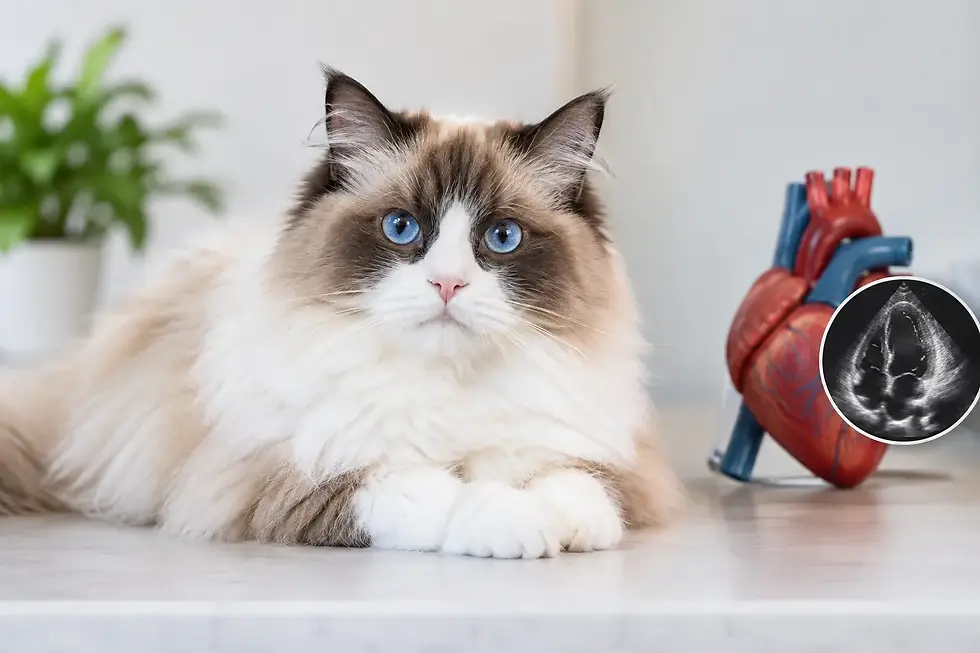
HCM is a useful example. Ragdolls can be tested for a known genetic variant associated with HCM risk. A negative result is reassuring and meaningful within that test's scope, but it does not rule out every form of heart disease. Responsible breeders understand this distinction and may use additional veterinary guidance, family-line knowledge, and cardiac evaluation when appropriate.
The same is true of PKD, FeLV, and FIV screening. A negative result reflects the cat's status at the time and within the limits of the test used. Good programs reduce risk through testing, sensible biosecurity, veterinary oversight, and careful management. They do not make promises that medicine cannot support.
For families, this honesty is a positive sign. A breeder who explains limitations clearly is showing respect for both the cats and the people trusting them.
Records Families Should Expect to Discuss
You do not need a veterinary degree to ask useful questions. A reputable breeder should be comfortable discussing what they test for, why they use those tests, and how those results inform breeding decisions. Depending on the program, families may be shown or provided copies of parent health testing, veterinary records relevant to the kitten, registration information, and a written agreement.
The conversation matters as much as the paperwork. Ask when testing was completed and whether the breeder can explain the results. Ask how often breeding cats are seen by a veterinarian. Ask what happens if a cat develops a concern that affects future breeding plans. A caring answer will usually be specific, calm, and centered on the animal's welfare.
It is also reasonable to ask about the kitten's upbringing. Health is not limited to laboratory results. Kittens benefit from clean living spaces, appropriate nutrition, parasite prevention guided by veterinary advice, gentle socialization, and enough human interaction to build confidence. A kitten raised with daily attention is often better prepared for the ordinary moments of family life, from the vacuum cleaner to a child's laughter.
The Trade-Off Behind Responsible Breeding
Thoughtful testing, veterinary care, quality nutrition, clean housing, limited litters, and time spent socializing kittens all require significant investment. This is one reason a carefully raised Ragdoll kitten may cost more than a kitten offered through an unverified online listing.
Price alone does not prove quality, and an expensive kitten is not automatically from an ethical breeder. Still, unusually low prices, pressure to send money immediately, refusal to discuss parent cats, or vague statements such as “health guaranteed” without details deserve caution. Families should be able to slow down, ask questions, and understand the reservation process before making a commitment.
There are also situations where the right choice is to remove a cat from a breeding program, even when that decision is difficult. A responsible breeder places the cat's well-being ahead of a planned litter or a financial outcome. This is one of the clearest signs that quality truly comes before quantity.
How This Protects Your Future Kitten
A health-tested program cannot remove every uncertainty from life, but it can give your kitten a stronger beginning. It reduces avoidable risks, supports informed breeding decisions, and creates a record of care that follows the kitten into your home.
At Hill Raising Ragdolls, we believe families deserve both warmth and clarity: a kitten raised with loving attention, along with straightforward information about the health practices behind that care. The right breeder will welcome your questions because those questions come from the same place as their work - wanting each kitten to have a healthy, cherished life.
When you find a breeder willing to show their standards through actions, records, and ongoing support, you are not simply choosing a beautiful Ragdoll. You are choosing the careful beginning that every beloved family cat deserves.


Comments