


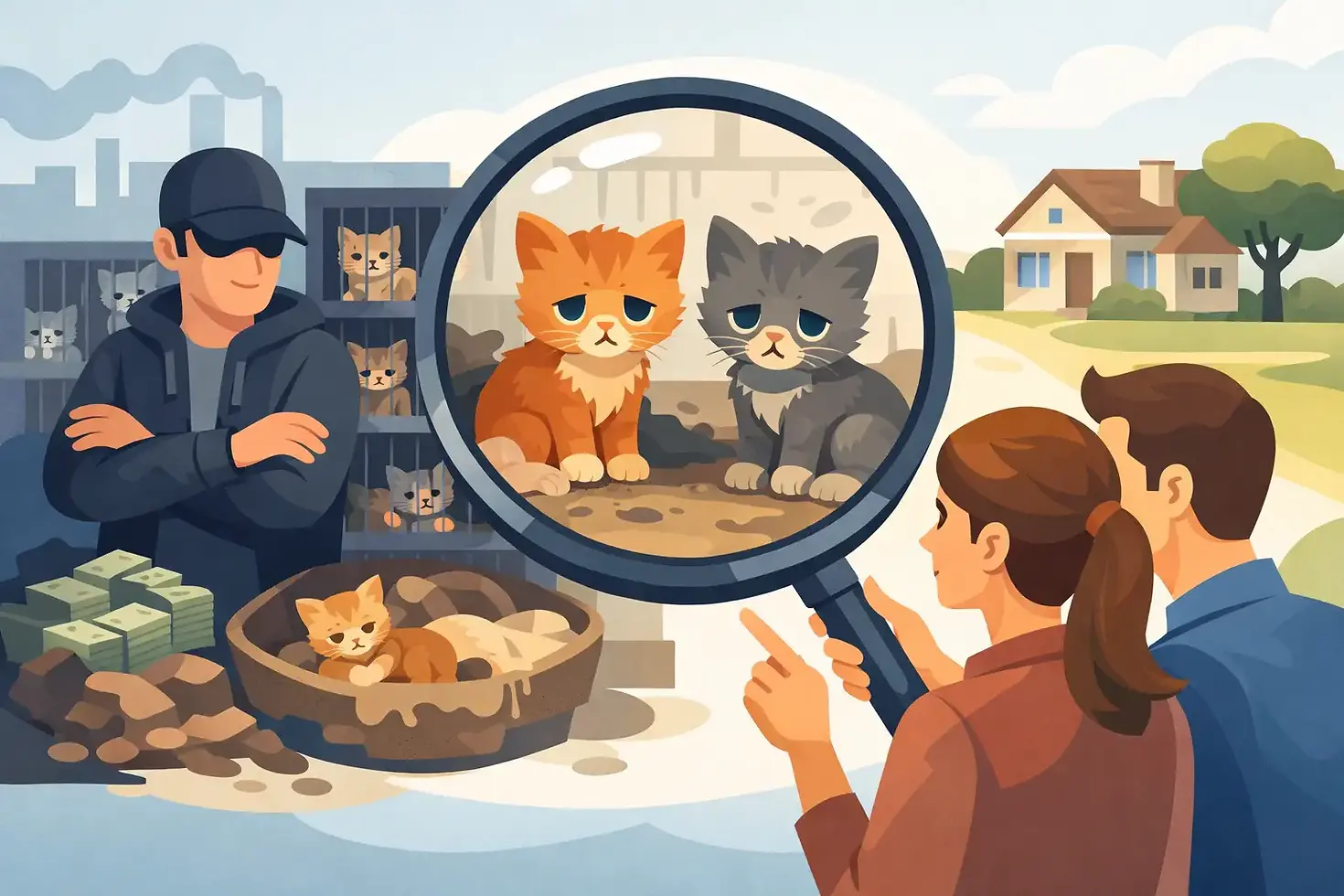
How to Spot Kitten Mill Breeders Fast
A kitten listing can look perfect at first glance - big eyes, soft fur, a sweet caption, and a promise that the kitten is "ready now." That is exactly why learning how to spot kitten mill breeders matters before you fall in love with a photo. When emotions move faster than good judgment, families can end up supporting unhealthy breeding practices and bringing home a kitten with preventable medical or behavioral struggles.
For many buyers, the hardest part is that poor breeders rarely introduce themselves that way. They often borrow the language of responsible breeding. They may mention registration, say their kittens are "raised with love," or offer quick answers that sound reassuring until you ask a few deeper questions. A kitten mill breeder depends on urgency, limited transparency, and volume. A responsible breeder depends on trust, patience, and long-term care.
How to spot kitten mill breeders before you commit
The first clue is usually speed. If someone always has many kittens available, across multiple litters, in several breeds, and ready for immediate pickup, that should make you pause. Ethical breeding is intentional. It takes planning, recovery time for queens, careful matching of homes, and a willingness to wait for the right placement. High-volume sellers often create the impression that kittens are a constant product rather than living animals being thoughtfully raised.
Price can also tell part of the story, but it is not as simple as cheap equals bad and expensive equals good. Some kitten mills charge low prices to move kittens quickly. Others charge premium prices because they know buyers associate cost with quality. The more useful question is what supports that price. Can the breeder clearly explain health testing, veterinary care, socialization, pedigree, registration, and the time invested in raising each kitten? If the answer is vague, the number itself means very little.
Another early sign is poor communication. Responsible breeders usually ask you questions too. They want to know about your household, experience with cats, other pets, and what kind of temperament you hope for. If a seller seems eager to take a deposit without learning anything about your home, that is not a good sign. Good breeders care where their kittens go.
The breeder should welcome questions
A responsible breeder does not get defensive when you ask about health, lineage, living conditions, or contracts. In fact, thoughtful questions usually signal that you are a serious buyer. If someone becomes irritated, evasive, or pushes you to "just trust them," step back.
Ask whether the parent cats are health tested for breed-relevant conditions. For Ragdolls, that includes attention to heart health and other inherited concerns. Ask whether kittens receive veterinary exams, age-appropriate vaccines, parasite prevention, and whether they have been screened for common infectious diseases in the cattery. A breeder who prioritizes health should be able to explain their standards in plain language.
It also helps to ask what happens after you bring the kitten home. Responsible breeders rarely disappear after pickup day. They usually offer guidance, contracts, health terms, and ongoing support because they care about the kitten's adjustment and long-term well-being. Kitten mill breeders are usually focused on the transaction, not the relationship.
Transparency matters more than polished marketing
A nice website or social media page is not proof of ethical breeding. Photos can be staged. Testimonials can be selective. What you want is consistent transparency. Can the breeder show where kittens are raised? Do they explain their process clearly? Are their policies thoughtful, or do they feel designed to move kittens quickly and avoid accountability?
There are times when an in-person visit is not practical, especially for out-of-state families. In that case, video calls, current photos, and honest conversation become even more important. A breeder should be comfortable showing the kitten's environment, introducing the mother when appropriate, and discussing how the kittens are handled and socialized. If every request for more information is met with excuses, that hesitation tells you something.
Red flags in the kittens themselves
Sometimes the warning signs are visible in the kittens, even through photos or a visit. Kittens from high-volume operations may appear underweight, dirty, frightened, lethargic, or poorly socialized. They may seem unusually shut down or, on the other end, frantic and difficult to settle. While every kitten has a unique personality and even well-bred kittens can have an off moment, the overall picture should feel healthy, clean, and cared for.
Watch how the kittens respond to people. Have they been gently handled? Are they curious in a normal way for their age? Do they seem accustomed to household sounds and human interaction? Family-raised kittens are not identical, but they are usually familiar with everyday life. That early socialization can make a real difference in confidence and adjustment.
You should also pay attention to the age at which kittens are being sent home. If a breeder is willing to place kittens too young, that is a serious concern. Kittens need time with their mother and littermates for physical development, emotional regulation, and social learning. Sending them home early may be convenient for a seller, but it is not what is best for the kitten.
Contracts and policies reveal a lot
One of the clearest differences between responsible breeders and kitten mills is structure. Ethical breeders tend to have an application process, a contract, and defined expectations. They may limit breeding rights, require spay or neuter for pet kittens, explain their health guarantee, and outline what happens if a buyer can no longer keep the cat. Those policies exist to protect the animals, not to make things complicated.
A kitten mill breeder often has little formal process beyond payment and pickup. Or they may have paperwork that looks official but says very little. Read closely. If there is no meaningful contract, no health information, and no sign the breeder feels responsible for the kitten after the sale, that should concern you.
At Hill Raising Ragdolls, this is one reason we believe a careful process matters. Responsible breeding is not only about producing beautiful kittens. It is about protecting their health, supporting their transition, and making sure each placement is the right fit.
Common tactics kitten mills use to gain trust
Some sellers rely on urgency. They tell you several buyers are waiting, the price is going up tomorrow, or the kitten must be claimed immediately. Pressure is useful when someone wants you to stop thinking critically. A good breeder understands that choosing a kitten is a significant decision and gives you room to ask, read, and prepare.
Others use partial truths. They may say they are registered, but registration alone does not confirm ethical breeding. They may say a kitten has seen a vet, but that is not the same as complete health practices and breed-specific testing. They may describe kittens as home-raised, when in reality they are produced in large numbers with minimal individual attention. The details matter.
There is also the issue of meeting locations. If a seller refuses to let you see where kittens are raised and insists on delivering to a parking lot or public meetup every time, be cautious. There can be legitimate biosecurity reasons a breeder limits home visits, but responsible breeders can usually explain that clearly and still provide meaningful transparency through other methods.
What a responsible breeder usually looks like
A good breeder is rarely the one making the process feel easiest in the short term. They may have a waitlist. They may ask you to fill out an application. They may spend time educating you about grooming, diet, transition, and breed traits. They may say no if a home is not the right fit. All of that can feel slower, but it often reflects care rather than inconvenience.
You will usually notice that responsible breeders know their cats as individuals. They can talk about temperament, strengths, quirks, health history, and development with real familiarity. Their focus is not just on selling a kitten. It is on raising one well.
If you are unsure, trust the pattern more than the pitch. One polished answer does not outweigh multiple concerns. One adorable photo does not cancel poor living conditions or missing health information. When you learn how to spot kitten mill breeders, you are really learning how to recognize the difference between a sales operation and a breeding program built around the welfare of cats.
The right breeder should leave you feeling informed, respected, and calm - not rushed, confused, or pressured. Take your time. Ask the extra question. A healthy, well-raised kitten is worth waiting for, and so is the peace of mind that comes with bringing one home the right way.


Comments