


Cat Pedigree Guide for Ragdoll Kitten Families
A pedigree can look impressive at first glance: rows of registered names, colors, titles, and unfamiliar abbreviations. But for a family choosing a Ragdoll kitten, the paper matters most when it helps answer practical questions. This cat pedigree guide explains what a pedigree can tell you, what it cannot tell you, and how to use it as one part of choosing a responsibly raised kitten.
A well-bred Ragdoll should be more than a pretty name on a document. Families deserve to understand the kitten’s background, the breeder’s standards, and the care that has gone into each generation.
What a Cat Pedigree Actually Shows
A cat pedigree is a family tree. It records a kitten’s parents, grandparents, and usually several earlier generations within a recognized breed registry. In a purebred Ragdoll pedigree, you may see the registered names of cats from the United States and abroad, along with identifying registration numbers, colors, patterns, and sometimes show titles.
Most pedigrees trace three to five generations. A five-generation document gives you a broader view of the breeding line, while a shorter pedigree still confirms the kitten’s immediate ancestry. Either can be useful when paired with transparent information from the breeder.
For prospective Ragdoll owners, a pedigree helps confirm that the kitten comes from Ragdoll lines rather than simply resembling a Ragdoll. Ragdolls have a distinct breed standard, including their large size, blue eyes, semi-long coat, and affectionate, people-oriented nature. A pedigree supports the breeder’s claim of purebred lineage, but it is not a promise that every kitten will have the same personality, size, or coat as another.
How to Read a Ragdoll Cat Pedigree Guide
The top of the pedigree typically identifies the kitten, including its registered name, date of birth, sex, color and pattern, and registry number. Registered names often include the breeder’s cattery name. This is not merely decorative. A consistent cattery prefix can help show where cats in a line were bred and registered.
Below the kitten’s name, the pedigree branches into the sire, or father, and dam, or mother. Each parent then branches into grandparents and earlier ancestors. You may see names such as seal point, blue bicolor, chocolate mitted, or lilac lynx point. These descriptions identify color and pattern, not the kitten’s health or temperament.
Titles may appear before or after an ancestor’s name. Depending on the registry, titles can indicate that a cat competed successfully in shows or met certain breed-standard requirements. Titles can reflect a breeder’s involvement in showing and preserving breed type, but they should not be treated as the only mark of a quality breeder. A cherished companion kitten does not need champion parents to be healthy, social, and well suited to family life.
You may also notice repeated names within a pedigree. Some line breeding has historically been used to preserve desired breed traits. However, responsible breeders should understand their lines, make thoughtful pairings, and use appropriate health screening rather than relying on appearance or pedigree alone. A pedigree is most meaningful in the hands of a breeder who can explain it clearly and honestly.
Registry Papers and Registration Are Not the Same Thing
The terms pedigree, registration, and papers are often used interchangeably, but they are slightly different. A pedigree is the documented ancestry. Registration is the kitten’s record with an organization such as The International Cat Association (TICA) or the Cat Fanciers’ Association (CFA).
A breeder may provide a pedigree at the time a kitten goes home, after the registration is completed, or after the family has met the terms of a purchase agreement. Timing can vary, especially when a breeder registers an entire litter before issuing individual paperwork. What matters is that the breeder explains the process in writing and is willing to answer questions before you place a reservation.
Companion kittens are commonly sold with pet registration and an agreement that they will not be bred. This protects the breeding program and helps prevent unplanned or irresponsible breeding. Breeding rights are a separate arrangement and should involve much more than payment for a pedigree.
A Pedigree Does Not Replace Health Testing
This is the most important distinction for families to understand. A pedigree shows lineage. It does not show whether every cat in that lineage was screened for inherited disease, evaluated by a veterinarian, or raised in a clean and attentive home environment.
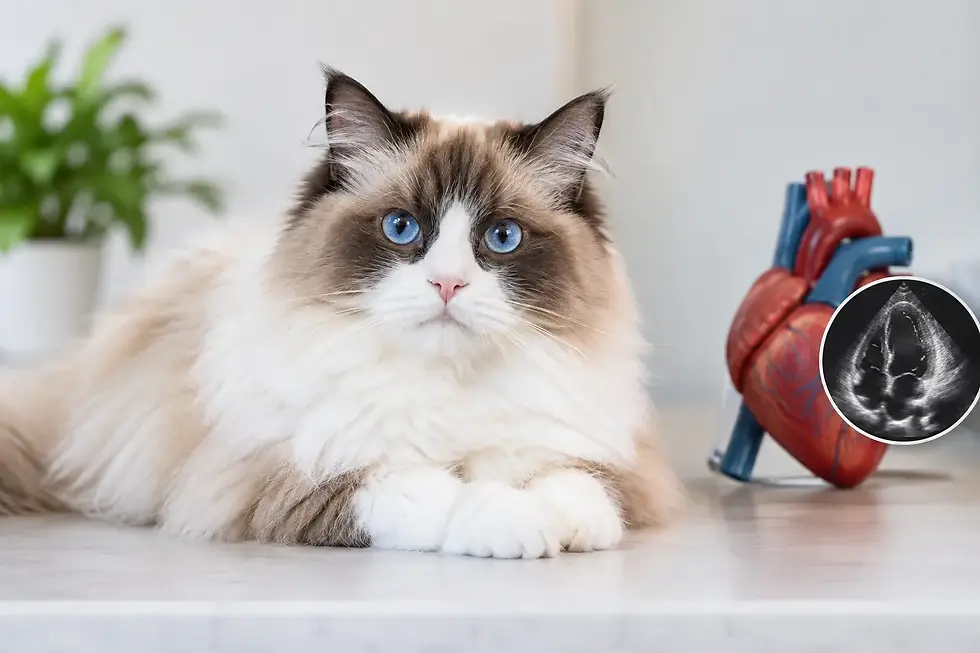
For Ragdolls, ask a breeder how they approach health testing in their breeding cats. Thoughtful programs may screen for concerns including hypertrophic cardiomyopathy, commonly called HCM, polycystic kidney disease, or PKD, and FeLV/FIV status. The appropriate records, the methods used, and the breeder’s willingness to discuss results matter far more than vague claims that a line is “healthy.”
Genetic testing is valuable, but it also has limits. A negative result for a known genetic variant does not guarantee that a kitten will never develop a health concern. Responsible breeding combines testing with careful selection, veterinary care, honest observation of each cat, and a willingness to make decisions that place feline welfare ahead of convenience.
Families should also ask about the kitten’s own care. Has the kitten been examined by a veterinarian? What vaccinations and deworming have been completed? How has the kitten been socialized? Was it raised around normal household activity, gentle handling, and age-appropriate play? These details are not printed on a pedigree, yet they strongly influence a kitten’s transition into your home.
Questions Worth Asking a Ragdoll Breeder
A reputable breeder should welcome respectful questions. You do not need to become an expert in every name on a pedigree. Instead, ask the breeder to help you understand the family line and the decisions behind it.
It is reasonable to ask which registry the parents and litter are registered with, when you will receive your kitten’s paperwork, and whether the kitten is being placed as a pet or with breeding rights. Ask about health testing for the parents, veterinary care for the litter, and the contract or health guarantee. You can also ask what the breeder has noticed about the kitten’s personality and which home may be the best fit.
Pay attention to the quality of the conversation. A caring breeder does not pressure you to make a fast decision or dismiss your questions. They should also ask about you: your household, other pets, children, schedule, and expectations. Matching a Ragdoll kitten with the right family is a relationship-based process, not a quick transaction.
Be cautious of listings that use the word “pedigree” as a substitute for proof. Photos of papers without clear breeder communication, unusually low prices, immediate shipping demands, or requests for payment without an application or contract deserve careful scrutiny. Scams often rely on urgency. A responsible breeder gives families room to understand the process.
Choosing the Whole Story, Not Just the Paper
At Hill Raising Ragdolls, we believe a kitten’s paperwork should support the trust families feel through the entire process. Registration and lineage matter, but so do health-conscious breeding decisions, gentle early socialization, clear communication, and lifelong respect for the cats in our care.
When you review a pedigree, let it begin a conversation rather than end one. Ask about the cats behind the names, how they are cared for, and how the breeder prepares each kitten for family life. The right Ragdoll kitten should come with a documented background, thoughtful support, and the feeling that someone has truly cared about where that little life starts.


Comments