


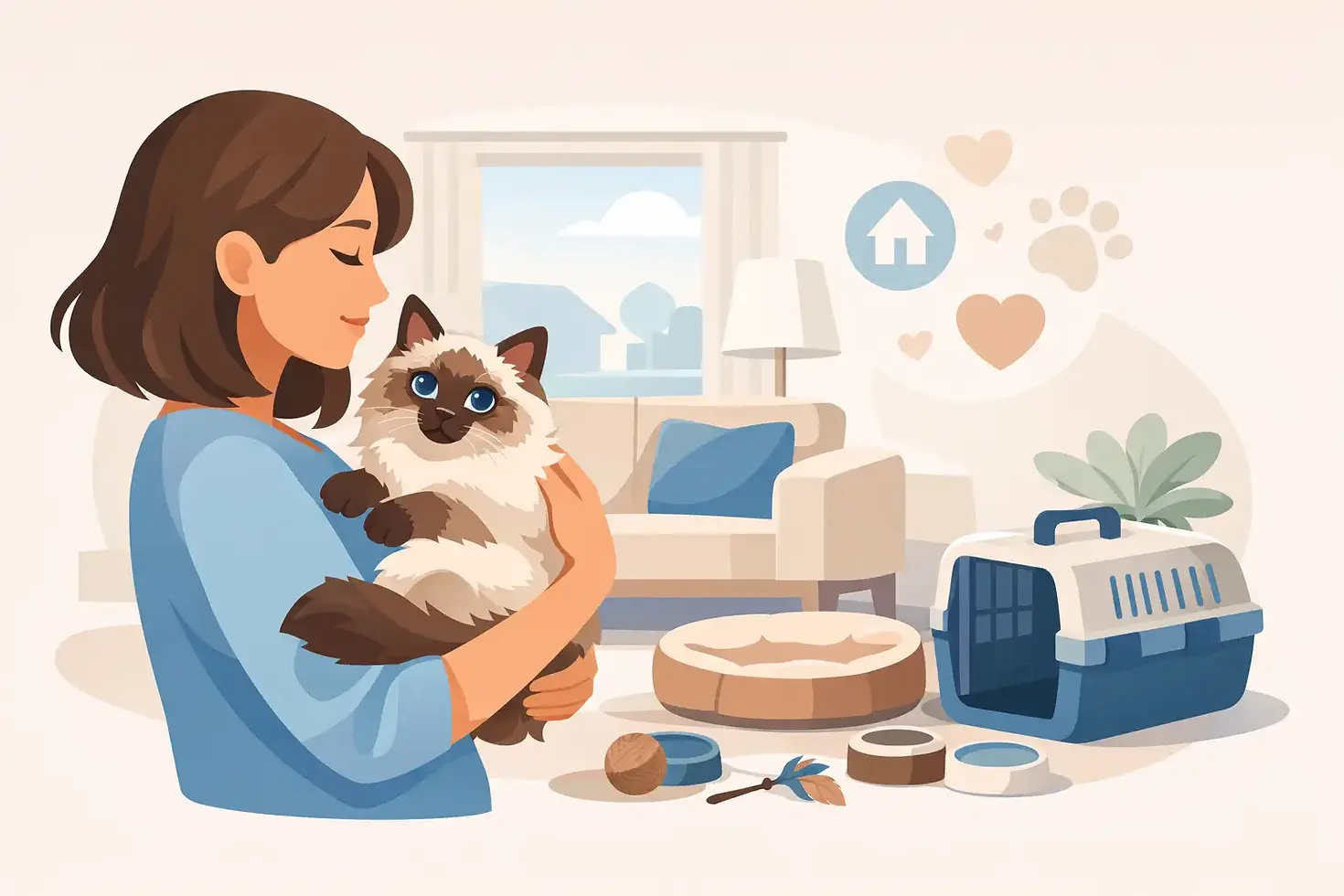
Bringing Home a Ragdoll Kitten
The first evening matters more than most people expect. A new kitten may look calm in your arms and then freeze the moment the carrier door opens. That is completely normal. Bringing home a ragdoll kitten is exciting, but it is also a major transition for a baby cat leaving familiar smells, littermates, and routine behind. A gentle start helps your kitten feel safe faster and sets the tone for the weeks ahead.
Ragdolls are known for their affectionate, people-oriented temperaments, but even a confident kitten needs time to adjust. This breed often bonds closely with its family, which is part of what makes the early days so meaningful. Your goal is not to impress your kitten with a perfect house. Your goal is to create a calm, predictable place where trust can grow.
Before bringing home a Ragdoll kitten
Preparation should start before pickup day. A kitten settles more easily when the basics are already in place and there is no last-minute scramble for food bowls or litter. Choose one quiet room or section of the house as your kitten's starting space. This area should have a litter box, food and water, a soft bed, a scratching surface, and a few safe toys.
Try to think like a kitten, not like an adult. Small objects on the floor, dangling cords, open toilet lids, houseplants, and easy-to-reach cleaning products can all become problems. Kittens are curious, fast, and surprisingly good at finding trouble in the ten seconds you look away. A little prevention makes the transition much easier.
It also helps to ask your breeder what food your kitten is currently eating and what litter the kitten has been using. Keeping those things consistent at first can reduce stress and avoid stomach upset or litter box confusion. If you plan to change diet or litter later, do it gradually once your kitten is settled.
What to expect on the first day
When you arrive home, resist the urge to introduce your kitten to the whole house at once. Large spaces can feel overwhelming. Start in that prepared room and let your kitten come out of the carrier on its own schedule. Some kittens step right out and investigate. Others need an hour tucked behind the bed before they feel brave enough to explore. Both responses are normal.
Keep the room quiet. Speak softly. Sit on the floor if you can and let your kitten approach you. Children should be supervised closely during this stage, especially if they are excited. The kindest first impression is a peaceful one.
Eating, drinking, and using the litter box may not happen right away. Many kittens wait until the room is quiet and they feel less watched. If your kitten seems shy, that does not mean anything is wrong. In most cases, confidence grows steadily over the first few days.
Bringing home a ragdoll kitten with children or other pets
Families often ask how quickly they should introduce everyone. The honest answer is that it depends on the personalities involved. A gentle, cat-savvy child is very different from a busy toddler, and a calm older dog is very different from a young dog who wants to play chase.
With children, clear expectations help. Teach them to let the kitten rest, avoid carrying the kitten around constantly, and use quiet hands. Ragdolls are typically loving and tolerant, but they are still kittens. They need sleep, routine, and protection from too much stimulation.
With resident pets, slow introductions are usually best. Start with scent before face-to-face meetings. Let pets smell bedding or a blanket the kitten has used. Controlled visual introductions can come next, followed by short, supervised interactions. Do not rush this just because everyone seems curious. A steady start is usually more successful than a dramatic one.
Cats in particular may need extra time. Even friendly adult cats can be unsettled by a newcomer. Hissing, staring, or avoiding the room at first does not always mean the relationship will be poor. It often means the household needs a little patience.
Feeding, litter, and routine in the first week
Kittens thrive on consistency. In the early days, feed the same food your kitten has been eating unless your veterinarian advises otherwise. Sudden food changes can lead to digestive upset at exactly the time you are trying to reduce stress. Fresh water should always be available, and food and water should not be placed right beside the litter box.
Litter habits are usually strongest when the box is easy to find, easy to enter, and kept clean. For one kitten, you may still want more than one litter box if your home is large. That is especially true once your kitten begins exploring beyond the starter space.
Routine also matters more than people realize. Feeding around the same times each day, having regular quiet play sessions, and keeping bedtime reasonably predictable all help your kitten feel secure. Ragdolls tend to enjoy close companionship, so your presence is part of that routine too.
Health and peace of mind
One of the biggest benefits of working with a conscientious breeder is starting with a kitten who has had thoughtful early care. Health testing in breeding cats, careful observation, veterinary support, and strong socialization practices all make a difference long before pickup day. For families trying to avoid heartbreak and uncertainty, those standards matter.
Even so, your responsibility starts the moment your kitten comes home. Schedule the first veterinary visit within the timeframe recommended by your breeder or contract. Bring any records you were given, including vaccination and deworming information. This visit is not just a formality. It gives your veterinarian a baseline and gives you a place to ask practical questions about nutrition, growth, and preventive care.
Watch your kitten's energy, appetite, stool quality, and litter habits closely during the first week. A little caution is wise, but try not to panic over every nap or quiet moment. Kittens sleep a lot. What matters is the full picture. If something feels off, ask.
The Ragdoll temperament and the adjustment period
People are often drawn to this breed because Ragdolls are known for being affectionate, relaxed, and deeply attached to their people. That reputation is well earned, but temperament still has layers. Some kittens are bold from the first hour. Others are gentle and loving but more reserved at first. Breed tendencies matter, but individual personality matters too.
This is where patience pays off. A kitten who hides on day one may be following you from room to room by day ten. A kitten who wants constant cuddles may still need structured play and quiet alone time. Bringing home a ragdoll kitten is partly about preparation, but it is also about reading the kitten in front of you instead of forcing a timeline.
Play is one of the best ways to build confidence. Wand toys, soft balls, and short interactive sessions help your kitten burn energy and form positive associations with you. It is also the easiest way to redirect normal kitten behaviors like pouncing on feet or climbing where they should not.
Common mistakes new owners make
Most mistakes come from good intentions. People want the kitten to feel loved, so they overhandle, overintroduce, or change too much too quickly. That can backfire. Too many visitors, too much house access, or immediate diet changes can make the first week harder than it needs to be.
Another common mistake is assuming a quiet kitten is automatically unhappy. Some kittens simply need time to observe before joining in. On the other hand, a very outgoing kitten still needs rest and structure. Confidence is not the same as maturity.
It is also easy to underestimate how much early habits shape later behavior. Scratching posts, gentle grooming practice, nail trimming, carrier comfort, and positive vet handling should all begin early and stay calm. Small routines done consistently are often more effective than occasional big efforts.
A home built on trust
At Hill Raising Ragdolls, we believe the transition home should feel supported, not rushed. Families do best when they understand that the first days are not a test of whether the kitten likes them. They are the beginning of a relationship.
If you prepare your space, move at your kitten's pace, and keep the routine steady, most Ragdoll kittens adjust beautifully. Before long, that quiet little newcomer is likely to be stretched out beside you, following you into the kitchen, or greeting you at the door. Give your kitten the gift of a calm beginning, and the bond that follows is often something truly special.


Comments