


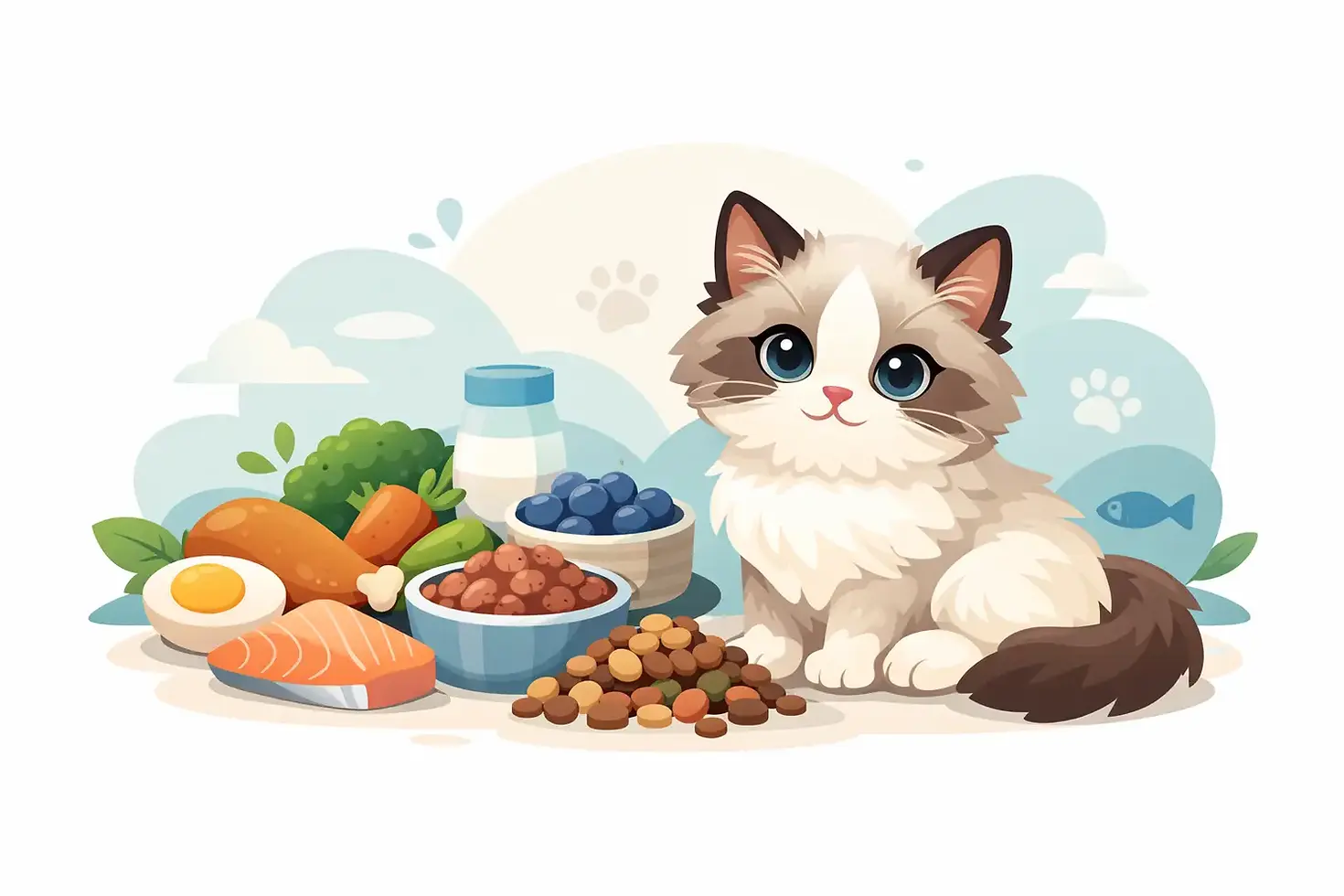
Best Foods for Ragdoll Kittens
A Ragdoll kitten’s coat may be soft and cloud-like, but their nutritional needs are not delicate guesswork. The best foods for ragdoll kittens are the ones that support steady growth, healthy muscle development, digestion, and a gentle transition into family life without upsetting a young stomach.
As breeders and kitten caretakers, we see how much early nutrition shapes energy level, coat quality, stool consistency, and even how confidently a kitten settles into a new home. Ragdolls are known for their substantial size, slow maturity, and affectionate temperament. That combination makes it especially important to choose food that is complete, balanced, and appropriate for kitten growth rather than simply picking the most expensive bag on the shelf.
What makes the best foods for Ragdoll kittens?
Ragdoll kittens are not a separate species with entirely different dietary rules, but they do benefit from thoughtful feeding. They are a large, slow-maturing breed, which means they need reliable nutrition over many months of development. A good kitten food should provide high-quality animal protein, adequate fat for growth and brain development, and a full balance of vitamins and minerals formulated specifically for kittens.
Protein matters because kittens are building muscle, organs, skin, and coat at a rapid pace. Animal-based protein sources such as chicken, turkey, or fish are generally easier to recognize as appropriate foundations for a kitten diet. Fat is equally important, especially for energy. Young kittens burn through calories quickly, and a food that is too lean may not support healthy growth as well as one designed for the kitten life stage.
Digestibility also deserves more attention than many people realize. A food can look excellent on the label and still be a poor fit for a particular kitten if it leads to soft stools, frequent vomiting, or poor appetite. The best choice is often the food your kitten thrives on consistently, not the one with the most impressive marketing.
Wet food, dry food, or both?
For most families, a combination approach works very well. Wet food helps with moisture intake, which supports hydration and can be gentler for some kittens. Dry food is convenient, easy to portion, and may work well for scheduled meals or limited free feeding, depending on your breeder’s and veterinarian’s guidance.
Wet food can be especially useful during transitions. When a kitten moves to a new home, stress alone can affect appetite and digestion. A soft, aromatic food is often easier to accept in those first few days. Dry food still has a place, particularly if the kitten has already been raised on it and does well.
There is no single right format for every Ragdoll kitten. Some do beautifully on mostly canned food. Others thrive on a mixed feeding routine. What matters most is that the food is labeled for growth or all life stages, the kitten eats it readily, and digestion stays stable.
The nutrients that matter most
When families ask what to look for first, we usually start with the basics rather than the buzzwords. A kitten needs complete nutrition, not food trends.
Animal protein should be a major part of the diet. This supports lean growth and the development of a strong body frame. Balanced fat content is also important for energy, skin health, and coat condition. DHA is a helpful nutrient to look for because it supports brain and vision development during kittenhood.
Mineral balance matters as well. Calcium and phosphorus need to be present in appropriate amounts for growing bones and teeth. This is one reason adult cat food is not a good substitute for kitten food. Even if an adult formula seems high quality, it may not meet the needs of a growing kitten.
Taurine is another essential nutrient. Cats require it, and kitten foods should contain it in proper amounts. Since Ragdolls are a breed families often choose for long-term companionship, supporting heart and eye health from the beginning is part of smart feeding.
Ingredients to approach with common sense
It is easy to get pulled into online debates about ingredients, but most families are better served by looking for overall quality and tolerance. Named animal proteins are reassuring. A clearly formulated kitten food from a reputable manufacturer is generally a safer bet than a boutique formula with dramatic claims.
That said, some kittens have sensitive stomachs. If a food seems to cause repeated loose stool, excess gas, or poor appetite, it may simply not be the right match. Frequent switching can also create problems, so it helps to give a food time unless your veterinarian advises otherwise.
Grain-free foods are sometimes chosen by well-meaning owners who assume they are automatically better. In reality, many kittens do perfectly well with grains if the formula is balanced and digestible. The better question is not whether a food contains grain, but whether the kitten is thriving on it.
How to choose the best food for your specific kitten
The best foods for ragdoll kittens are not chosen in isolation. They should fit the kitten’s age, digestion, growth rate, and the feeding routine already established before going home.
Start with what your breeder has been feeding, at least initially. This gives your kitten consistency during a major life change. New home, new people, new sounds, and new routines are already a lot to handle. Keeping the diet stable can reduce stress-related stomach upset.
If you want to change foods later, do it gradually over seven to ten days. Mix a small amount of the new food into the current food and increase it slowly. A rushed transition often leads to digestive issues that are blamed on the new food when the real problem was the speed of the switch.
Pay attention to the kitten in front of you. A healthy coat, steady weight gain, good energy, normal stools, and an eager appetite are all encouraging signs. If those pieces are in place, you are probably on the right track.
Feeding schedule and portion concerns
Ragdoll kittens need regular meals. Because they are growing quickly, they usually do better with multiple meals a day rather than one or two large feedings. Younger kittens often benefit from three to four meals daily, while older kittens may gradually move toward fewer meals as they mature.
Portion size depends on the food’s calorie density, the kitten’s age, and the individual kitten’s metabolism. Some Ragdolls are enthusiastic eaters, and some are more moderate. Feeding recommendations on labels are a starting point, not a perfect rule.
This is where body condition matters. You want steady growth without overfeeding. Ragdolls are meant to become substantial cats, but that does not mean a kitten should become heavy too quickly. Rapid weight gain from excess calories can be hard on a developing body.
When a kitten may need a different approach
Some kittens need a little extra thought around food. A very sensitive stomach, a history of loose stool, poor weight gain, or food refusal deserves closer attention. Teething can also briefly affect appetite. So can stress after travel or moving.
If your kitten has repeated digestive upset, do not keep cycling through random foods in frustration. Work with your breeder and veterinarian to narrow down what is happening. Sometimes the issue is the formula itself. Sometimes it is parasites, stress, overfeeding, or treats that are too rich.
Treats should stay simple and limited during the early adjustment period. Families often want to spoil a new kitten, which is understandable, but too many extras can quickly upset a young digestive system. It is often wiser to let the regular kitten food do the heavy lifting.
Common mistakes with Ragdoll kitten nutrition
One of the most common mistakes is switching food immediately after bringing a kitten home. Another is choosing based on packaging rather than performance. A third is feeding adult cat food too early because the kitten seems large for its age.
Ragdolls do grow into large cats, but they still need kitten nutrition while they are developing. Large breed dogs often get special size-based formulas, and cat owners sometimes assume the same logic applies in exactly the same way. For kittens, the key is complete growth nutrition and careful monitoring rather than overcomplicating the label.
Another mistake is assuming more is always better. More supplements, more toppers, more treats, and more variety can sometimes make feeding harder, not better. A stable, balanced routine usually serves kittens best.
A practical way to feel confident
If you want a sensible path forward, choose a reputable kitten food, keep the transition slow, feed regular meals, and watch your kitten more than the marketing. That simple approach prevents a lot of avoidable problems.
At Hill Raising Ragdolls, we believe nutrition is part of the same larger commitment as health testing, socialization, and careful placement. Families do not just need a bag recommendation. They need the confidence to recognize what healthy feeding looks like once their kitten is curled up on their couch instead of in our nursery.
A well-fed Ragdoll kitten should look bright, feel solid without being heavy, and approach meals with happy interest. If you keep your focus there, you will usually make better decisions than any trend can make for you.


Comments